Key take aways
 The business model of the think tanks is to sell political influence:
– Buy the “experts” who produce the information for political decision-makers and the media.
The think tanks are also a waiting room for officials who are waiting to get back into office.
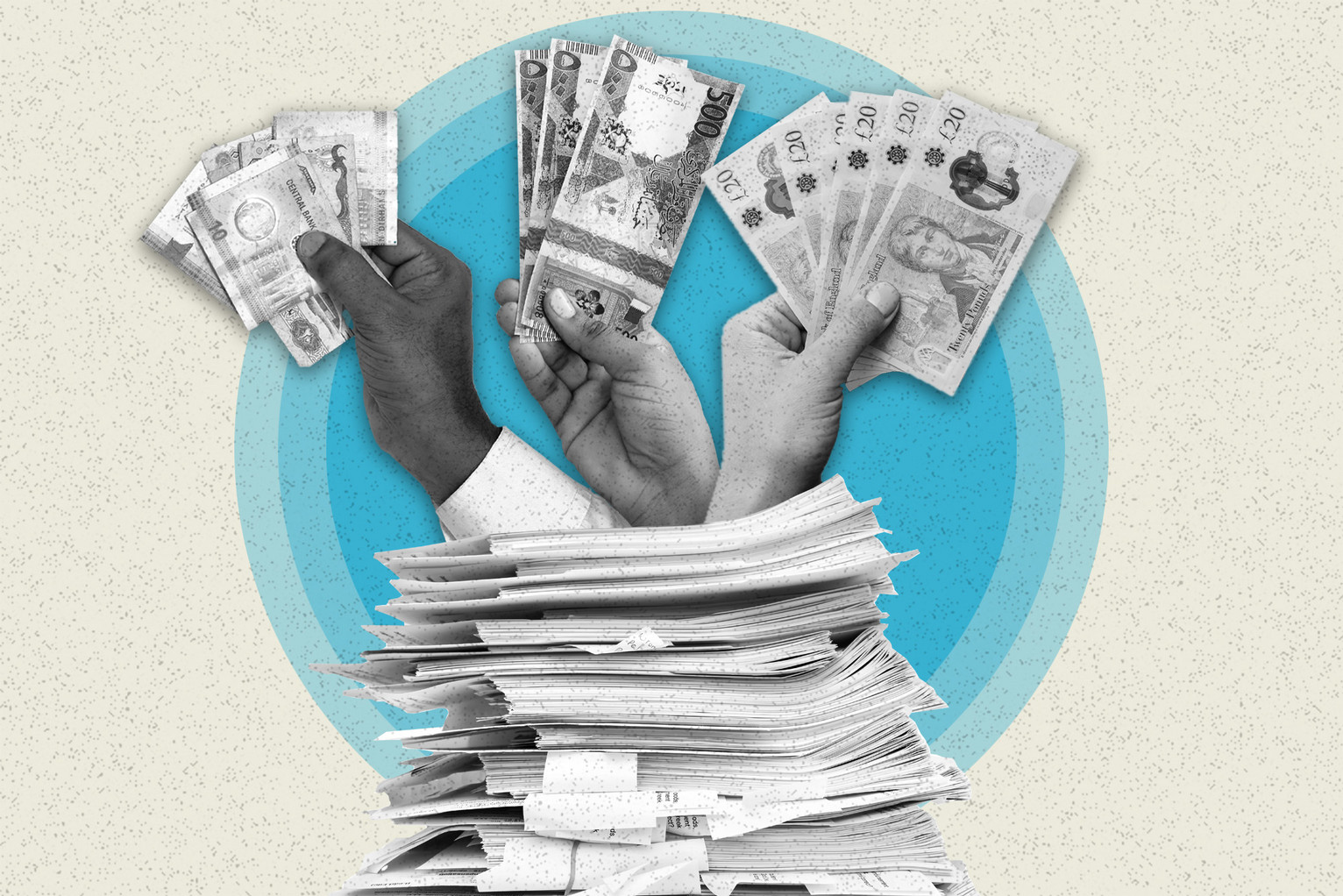
Washington’s think-tank industry, which sets the terms of debate for so much of American policymaking, is floating on a sea of foreign-government and Pentagon-contractor dollars.
That’s the conclusion of a brand-new report [see attached file] out this morning and shared with me by a pair of scholars at the Quincy Institute for Responsible Statecraft, a think tank that officially eschews foreign-government money — and delights in tweaking the Beltway foreign-affairs establishment².
the paper says that the top 50 think tanks took in some $110 million over the past five years from foreign governments and related entities, including nearly $17 million from the United Arab Emirates, the largest single foreign donor. Leading Pentagon contractors, meanwhile, kicked in nearly $35 million over the same period.
The Atlantic Council and the Brookings Institution topped the list of foreign-government beneficiaries, taking in nearly $21 million and over $17 million, respectively. All in all, 54 different governments contributed to the industry, a list largely made up of pro-western democracies but also including fantastically wealthy authoritarian regimes like Saudi Arabia and Qatar.
[the report makes clear that the numbers it cites may only be partial]
[More than a third of the top foreign policy think tanks in the US don’t disclose any donor information,” said Freeman. The category encompasses 18 of the 50 biggest think tanks, including highly-regarded Beltway stalwarts like the American Enterprise Institute or the Washington Institute for Near East Policy. “We really have no clue whatsoever who is funding them. We call these organizations dark money think tanks.”]
According to Freeman and Cleveland-Stout, the typical think tank in 2024 looks a lot more like an advocacy group than a university.
Turkish President Recep Tayyip Erdogan speaks at the Brookings Institution in March 2016. The Atlantic Council and the Brookings Institution topped the list of foreign-government beneficiaries, taking in nearly $21 million and over $17 million, respectively. | Drew Angerer/Getty Images
____________
1. By Michael Schaffer
03/01/2025 05:00 AM EST
Michael Schaffer is a senior editor and columnist at POLITICO Magazine. He has covered national and local politics for over 20 years and spent seven years as editor-in-chief of the Washingtonian. His Capital City column chronicles the inside conversations and big trends shaping Washington politics.
2. About the Authors
Ben Freeman is director of the Democratizing Foreign Policy program at the Quincy
Institute for Responsible Statecraft. He investigates money in politics, defense
spending, and foreign influence in America. He is the author of The Foreign Policy
Auction, which was the first book to systematically analyze the foreign influence
industry in the United States. Before joining the Quincy Institute, Ben founded the
Foreign Influence Transparency Initiative at the Center for International Policy, served as
deputy director of the National Security program at Third Way, and was a National
Security Fellow at the Project On Government Oversight. At the latter, he spearheaded
creation of the “Foreign Influence Database,” a repository of propaganda distributed by
foreign agents that was previously unavailable online.
Ben earned a PhD from Texas A&M University, where he taught in the Department of
Political Science at the Bush School of Government and Public Service. He is currently a
faculty member at the Institute for Defense and Business, where he teaches seminars
on the defense budget process and the foreign influence industry.
His work has appeared in numerous media outlets, including The New York Times, The
Washington Post, Los Angeles Times, The Wall Street Journal, and Politico. Ben has
appeared on CNN, BBC, NPR, Fresh Air with Terry Gross, and numerous other media
outlets. He has also testified before the U.S. Senate Armed Services Committee.
Nick Cleveland-Stout is a junior research fellow in the Democratizing Foreign Policy
program at the Quincy Institute for Responsible Statecraft. Previously, he conducted
research on U.S.–Brazil relations as a 2023 Fulbright Fellow at the Federal University of
Santa Catarina, with a particular focus on the influence of American think tanks in
Brazil. Nick is also a former Marcellus Policy Fellow with the John Quincy Adams
Society, where he authored “The Case for a ‘Green BRAC.’” His work has appeared in
Responsible Statecraft, The Nation, The Intercept, The Brazilian Report, Inkstick,