1. Strengthening Global South Cooperation for a More Inclusive and Sustainable Governance Rio de Janeiro, Brazil 6 July 2025
XVII BRICS Summit Rio de Janeiro Declaration “Strengthening Global South Cooperation for a More Inclusive and
Sustainable Governance”
Full text of the Declaration²
Excerpts from the Declaration:
• We reiterate our commitment to reforming and improving global governance by promoting a more just, equitable, agile, effective, efficient, responsive, representative, legitimate, democratic and accountable international and multilateral system in the spirit of extensive consultation, joint contribution and shared benefits.
• We reaffirm our commitment to multilateralism and upholding the international law, including the Purposes and Principles enshrined in the Charter of the United Nations (UN), in their entirety and interconnectedness as its indispensable cornerstone, and the central role of the UN in the international system.
We reiterate our support for a comprehensive reform of the United Nations, including its Security Council, with a view to making it more democratic, representative, effective and efficient, and to increase the representation of developing countries in the Council’s memberships so that it can adequately respond to prevailing global challenges and support the legitimate aspirations of emerging and developing countries from Africa, Asia and Latin America, including BRICS countries, to play a greater role in international affairs, in particular in the United Nations, including its Security Council.
We acknowledge that multipolarity can expand opportunities for EMDCs to develop their constructive potential and enjoy universally beneficial, inclusive and equitable economic globalization and cooperation.
• We condemn the imposition of unilateral coercive measures that are contrary to international law, and reiterate that such measures, inter alia in the form of unilateral economic sanctions and secondary sanctions, have far-reaching negative implications for the human rights, including the rights to development, health and food security, of the general population of targeted states, disproportionally affecting the poor and people in vulnerable situations, deepening the digital divide and exacerbating environmental challenges. We call for the elimination of such unlawful measures, which undermine international law and the principles and purposes of the UN Charter.
• We reaffirm that BRICS member states do not impose or support non-UN Security Council authorized sanctions that are contrary to international law.
• We condemn the military strikes against the Islamic Republic of Iran since 13 June 2025, which constitute a violation of international law and the Charter of the United Nations, and express grave concern over the subsequent escalation of the security situation in the Middle East.
• We recall that the Gaza Strip is an inseparable part of the Occupied Palestinian Territory. We underline, in this regard, the importance of unifying the West Bank and the Gaza Strip under the Palestinian Authority, and reaffirm the right of the Palestinian people to self-determination, including the right to their independent State of Palestine.
• We reiterate that the principle “African solutions to African problems” should continue to serve as the basis for conflict resolution on the African continent.
We condemn in the strongest terms the attacks against bridges and railways infrastructure deliberately targeting civilians in Bryansk, Kursk and Voronezh regions of the Russian Federation on 31 May, 1 and 5 June 2025, resulting in multiple civilian casualties, including children.
• We commend Brazil’s BRICS Chairship in 2025 and express our gratitude to the government and people of Brazil for holding the XVII BRICS Summit in the city of Rio de Janeiro.
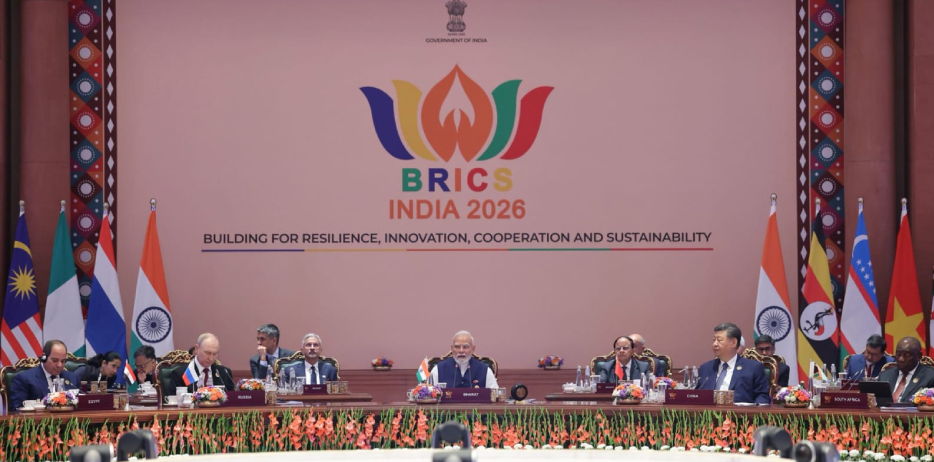
• We extend full support to India for its BRICS Chairship in 2026 and the holding of the XVIII BRICS Summit in India.
2. * We, the Leaders of BRICS countries, met in Rio de Janeiro, Brazil, from 6 to 7 July 2025 for the XVII BRICS Summit held under the theme: “Strengthening Global South Cooperation for a More Inclusive and Sustainable Governance”.
* We reaffirm our commitment to the BRICS spirit of mutual respect and understanding, sovereign equality, solidarity, democracy, openness, inclusiveness, collaboration and consensus. As we build upon 17 years of BRICS Summits, we further commit ourselves to strengthening cooperation in the expanded BRICS under the three pillars of political and security, economic and financial, cultural and people-to-people cooperation, and to enhancing our strategic partnership for the benefit of our people through the promotion of peace, a more representative, fairer international order, a reinvigorated and reformed multilateral system, sustainable development and inclusive growth.
* We welcome the Republic of Indonesia as a BRICS member, as well as the Republic of Belarus, the Plurinational State of Bolivia, the Republic of Kazakhstan, the Republic of Cuba, the Federal Republic of Nigeria, Malaysia, the Kingdom of Thailand, the Socialist Republic of Vietnam, the Republic of Uganda, and the Republic of Uzbekistan as BRICS partner countries.
* We underline the significance of the adoption of the BRICS Leaders’ Framework Declaration on Climate Finance and of the BRICS Leaders’ Statement on the Global Governance of Artificial Intelligence, as well as endorse the launch of the BRICS Partnership for the Elimination of Socially Determined Diseases. These initiatives reflect our joint efforts to foster inclusive and sustainable solutions to pressing global issues. Strengthening Multilateralism and Reforming Global Governance
* We reiterate our commitment to reforming and improving global governance by promoting a more just, equitable, agile, effective, efficient, responsive, representative, legitimate, democratic and accountable international and multilateral system in the spirit of extensive consultation, joint contribution and shared benefits. In this regard, we take note of the adoption of the Pact of the Future at the Summit of the Future, including its two annexes, the Global Digital Compact and the Declaration of Future Generations. Bearing in mind the need to adapt the current architecture of international relations to better reflect the contemporary realities, we reaffirm our commitment to multilateralism and upholding the international law, including the Purposes and Principles enshrined in the Charter of the United Nations (UN), in their entirety and interconnectedness as its indispensable cornerstone, and the central role of the UN in the international system, in which sovereign states cooperate to maintain international peace and security, advance sustainable development, ensure the promotion and protection of democracy, human rights and fundamental freedoms for all as well as cooperation based on solidarity, mutual respect, justice and equality. We also reiterate our commitment to ensuring greater and more meaningful participation and representation of Emerging Markets and Developing Countries (EMDCs), as well as Least Developed Countries (LDCs), especially from Africa and Latin America and the Caribbean, in global decision-making processes and structures and making them better attuned to contemporary realities. We also call for achieving equitable geographical representation in the Secretariat of the United Nations and other international organizations in a timely manner, as well as increasing the role and share of women, especially from EMDCs, at all levels of leadership and responsibilities in these organizations. We stress the need for the selection and appointment process of UN executive heads and senior positions to be guided by the principles of transparency and inclusiveness, and carried out in accordance with all the provisions of Article 101 of the UN Charter, with due regard for recruiting staff on a geographical basis as wide as possible and the increased participation of women, and adhere to the general rule that there should be no monopoly on senior posts in the UN system by nationals of any State or group of States. 6. Recognizing the 2023 Johannesburg-II Leaders’ Declaration, we reiterate our support for a comprehensive reform of the United Nations, including its Security Council, with a view to making it more democratic, representative, effective and efficient, and to increase the representation of developing countries in the Council’s memberships so that it can adequately respond to prevailing global challenges and support the legitimate aspirations of emerging and developing countries from Africa, Asia and Latin America, including BRICS countries, to play a greater role in international affairs, in particular in the United Nations, including its Security Council. We recognize the legitimate aspirations of African countries, as reflected in the Ezulwini Consensus and Sirte Declaration. We stress that the United Nations Security Council reform is to lead to the amplified voice of the Global South. Recalling the 2022 Beijing and 2023 Johannesburg-II Leaders’ Declarations, China and Russia, as permanent members of the United Nations Security Council, reiterate their support to the aspirations of Brazil and India to play a greater role in the United Nations, including its Security Council. 7. In light of the 80th Anniversary of the United Nations, we recall UNGA Resolutions 75/1, 77/335 and other relevant resolutions, and reiterate our commitment to provide the United Nations with all the required support it needs to discharge its mandate. We emphasize the strong call for reforms of the principal organs of the United Nations with a view to achieving concrete progress. We recommit to instill new life in the discussions on reform of the UN Security Council and continue the work to revitalize the General Assembly and strengthen the Economic and Social Council. We look forward to the successful conclusion of the 2025 Review of the Peacebuilding architecture.
8. We agree that, in the context of the contemporary realities of the multipolar world, it is crucial that developing countries strengthen their efforts to promote dialogue and consultations for more just and equitable global governance and mutually beneficial relations among nations. We acknowledge that multipolarity can expand opportunities for EMDCs to develop their constructive potential and enjoy universally beneficial, inclusive and equitable economic globalization and cooperation. We highlight the importance of the Global South as a driver for positive change, especially in the face of significant international challenges, including deepening geopolitical tensions, rapid economic downturns and technological changes, protectionist measures and migratory challenges. We believe BRICS countries continue to play a pivotal role in voicing the concerns and priorities of the Global South, as well as in promoting a more just, sustainable, inclusive, representative and stable international order based on international law. 9. Recalling that 2025 marks the eightieth anniversary of the end of the Second World War, a war which brought untold sorrow to humankind, particularly in Europe, Asia, Africa, the Pacific and other parts of the world, we render our full support to the UNGA Resolution 79/272 on the Eightieth anniversary of the end of the Second World War, on this historic event, which established the conditions for the creation of the United Nations, designed to save succeeding generations from the scourge of war. 10. On the 80th anniversary, we reiterate the urgent need to reform the Bretton Woods Institutions (BWI) to make them more agile, effective, credible, inclusive, fit for purpose, unbiased, accountable, and representative, enhancing their legitimacy. First and foremost, they must reform their governance structure to reflect the transformation of the global economy since their establishment. The voice and representation of EMDEs in the BWI must reflect their increasing weight in the global economy. Moreover, we call for improved management procedures, including through a merit-based and inclusive selection process that would increase regional diversity and representation of EMDEs in the leadership of the IMF and the WBG, as well as the role and share of women at the managerial level. 11. In the current context of uncertainty and volatility, the International Monetary Fund (IMF) must remain adequately resourced and agile, at the center of the global financial safety net (GFSN), to effectively support its members, particularly the most vulnerable countries. Despite the absence of quota realignment, we have provided consent to the proposed quota increase under the 16th General Review of Quotas (GRQ) and urge IMF members that have not yet done so to provide their consent and give effect to the quota increases under the 16th GRQ with no further delay. We urge the IMF Executive Board to fulfil the mandate set by the Board of Governors to develop approaches to quota share realignment, including through a new quota formula, under the 17th GRQ at the earliest possible time. We support the efforts of the IMF Executive Board and International Monetary and Financial Committee (IMFC) Deputies in developing general principles to guide future discussions and help foster convergence of views around the pressing quota and governance reforms. We reiterate that further quota realignment in the IMF should not come at the expense of developing countries, reflecting countries’ relative positions in the global economy, and increasing the shares of EMDEs. In line with the BRICS Rio de Janeiro Vision for IMF Quota and Governance Reform, we stand ready to engage constructively with other IMF members to guarantee that meaningful quota share realignment and governance reforms are included in the 17th GRQ.
… see attached file