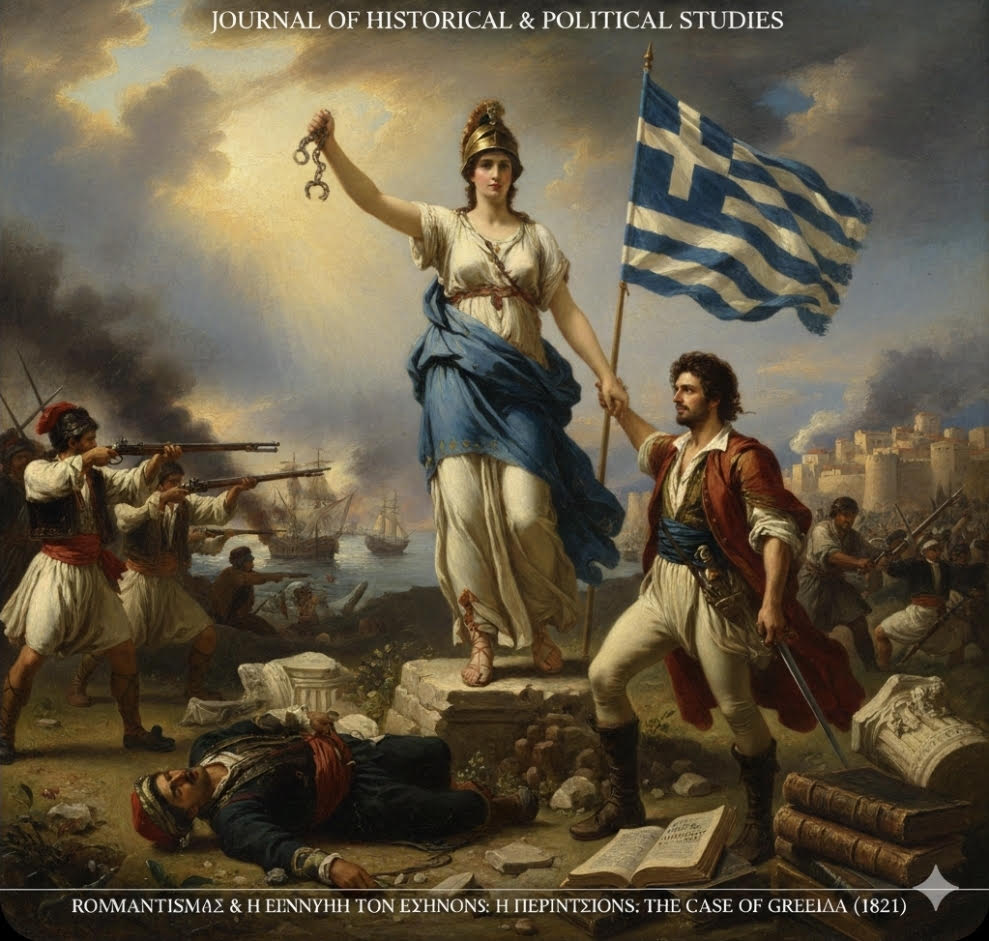
Τίτλος: Ο Ρομαντισμός και η Συγκρότηση των Εθνικών Ταυτοτήτων τον 19ο Αιώνα: Η Περίπτωση της Ελλάδας
Περίληψη
Το παρόν άρθρο εξετάζει τον ρόλο του Ρομαντισμού ως καταλύτη για τη γέννηση των εθνικών κρατών τον 19ο αιώνα, με επίκεντρο την ελληνική περίπτωση. Αναλύεται πώς η στροφή προς το συναίσθημα, την παράδοση και την ιστορική συνέχεια αντικατέστησε τον ορθολογισμό του Διαφωτισμού, προσφέροντας το ιδεολογικό υπόβαθρο για την Ελληνική Επανάσταση του 1821.
Εισαγωγή
Ο 19ος αιώνας χαρακτηρίζεται ως ο «αιώνας των εθνικισμών». Μετά το Συνέδριο της Βιέννης (1815), η Ευρώπη βρέθηκε σε μια διαρκή πάλη ανάμεσα στην παλαιά τάξη πραγμάτων και τις νέες δυνάμεις της εθνικής αυτοδιάθεσης. Ο Ρομαντισμός, ως καλλιτεχνικό και πνευματικό κίνημα, παρείχε τη «γλώσσα» με την οποία οι λαοί εξέφρασαν την ιδιαιτερότητά τους.
Ο Ρομαντικός Εθνικισμός
Σε αντίθεση με τον πολιτικό εθνικισμό της Γαλλικής Επανάστασης, ο Ρομαντικός Εθνικισμός (Romantic Nationalism), επηρεασμένος από στοχαστές όπως ο Johann Gottfried von Herder, έδωσε έμφαση στο Volksgeist (το πνεύμα του λαού)¹. Η γλώσσα, τα έθιμα και η λαϊκή ποίηση έγιναν τα τεκμήρια της εθνικής ύπαρξης.
Η Ελληνική Ιδιαιτερότητα: Φιλελληνισμός και Αρχαιότητα
Η Ελλάδα αποτέλεσε το κατεξοχήν παράδειγμα ρομαντικής έμπνευσης. Για τους Ευρωπαίους ρομαντικούς (Byron, Shelley, Delacroix), η Ελλάδα δεν ήταν απλώς μια γεωγραφική περιοχή, αλλά η κοιτίδα του πολιτισμού που έπρεπε να απελευθερωθεί από τον «ανατολίτικο δεσποτισμό».
> «Είμαστε όλοι Έλληνες. Οι νόμοι μας, η λογοτεχνία μας, η θρησκεία μας, οι τέχνες μας, έχουν όλα τις ρίζες τους στην Ελλάδα.» — Percy Bysshe Shelley, Hellas (1822).
Συμπεράσματα
Η ελληνική παλιγγενεσία υπήρξε το πρώτο επιτυχημένο παράδειγμα εφαρμογής του ρομαντικού εθνικισμού στην Ευρώπη. Η σύνδεση της αρχαίας κληρονομιάς με το σύγχρονο αίτημα για ελευθερία δημιούργησε μια ακαταμάχητη δυναμική που οδήγησε στην ίδρυση του νεοελληνικού κράτους.
Υποσημειώσεις / Παραπομπές:
1. Herder, J. G., Reflections on the Philosophy of the History of Mankind, 1784.
2. Beaton, R., Greece: Biography of a Modern Nation, Penguin, 2019.
3. Hobsbawm, E., The Age of Revolution: 1789–1848, Weidenfeld & Nicolson, 1962.
________________________________
Title:
Romanticism and the Emergence of National Identities in the 19th Century: The Case of Greece
Abstract
This article explores the role of Romanticism as a catalyst for the birth of nation-states during the 19th century, focusing on the Greek case. It analyzes how the shift toward emotion, tradition, and historical continuity supplanted Enlightenment rationalism, providing the ideological framework for the Greek War of Independence in 1821.
Introduction
The 19th century is often defined as the “Age of Nationalisms.” Following the Congress of Vienna (1815), Europe was locked in a struggle between the conservative restoration and the emerging forces of national self-determination. Romanticism provided the cultural “grammar” through which peoples articulated their unique identities.
Romantic Nationalism
Unlike the civic nationalism of the French Revolution, Romantic Nationalism—influenced by thinkers such as Johann Gottfried von Herder—emphasized the Volksgeist (the spirit of the people)¹. Language, folklore, and epic poetry became the primary evidence of a nation’s right to exist.
The Greek Case: Philhellenism and Antiquity
Greece served as the ultimate romantic project. For European Romantics (Byron, Shelley, Delacroix), Greece was not merely a territory but the cradle of civilization that required liberation from “Oriental despotism.” The Greek struggle was perceived as a crusade for the soul of Europe².
The Construction of Continuity
A key element of Greek Romanticism was the bridging of the gap between Ancient Greece and the modern Greek people. Intellectuals like Adamantios Korais and later Spyridon Zambelios worked to establish a continuous narrative that linked the Classical era, the Byzantine Empire, and the modern struggle³.
Conclusion
The Greek Revolution was the first successful application of Romantic Nationalism in Europe. By merging classical heritage with the modern quest for liberty, it created an irresistible momentum that redefined the map of Europe and the very concept of the nation-state.
Footnotes / References:
1. Herder, J. G. (1784). Outlines of a Philosophy of the History of Man.
2. St Clair, W. (2008). That Greece Might Still Be Free: The Philhellenes in the War of Independence. Open Book Publishers.
3. Dakin, D. (1973). The Greek Struggle for Independence, 1821–1833. University of California Press.