Executive summary
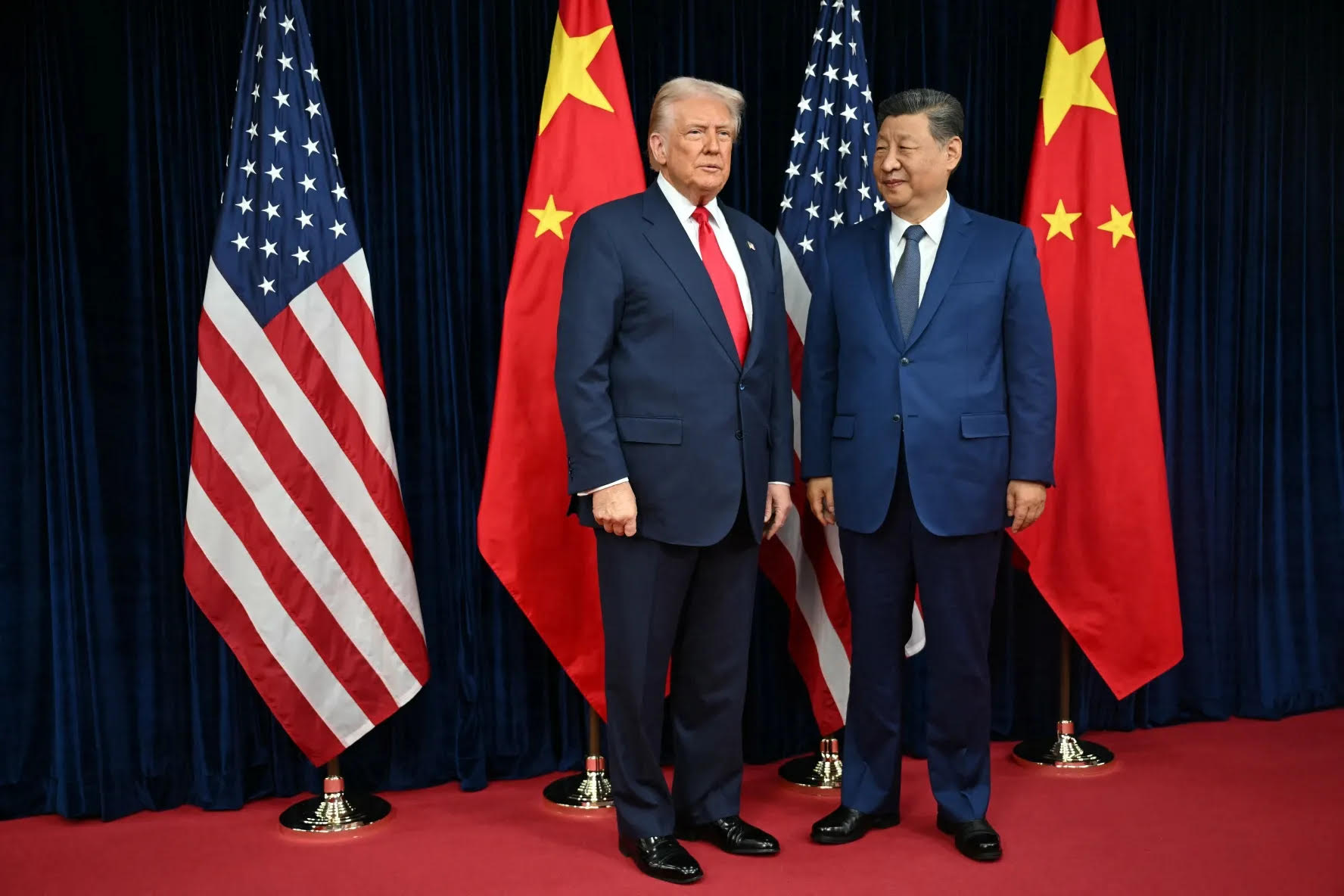
Without attracting significant fanfare, President Donald Trump has reoriented America’s approach to China. He has shifted the emphasis of the relationship away from an ideological battle or great power struggle toward competition focused on trade and technology. He has bestowed respect upon Chinese President Xi Jinping and, together, they have ushered in a period of relative strategic calm in the bilateral relationship. This was demonstrated by the one-year truce they adopted for their trade war during their October 30, 2025, meeting in Busan, South Korea.
Trump’s supporters tout his progress in doing deals with China, while his detractors argue that Trump is giving more than he is gaining in return.
This discontinuity in Trump’s approach to the U.S.-China relationship begs the question of what effect it will have on the relationship’s trajectory in the coming years.
This piece examines three possible pathways: first, a soft landing whereby both leaders invest in permanently improving the relationship; a hard split whereby Trump grows disillusioned and angry toward China over time, similar to the arc of events during the first Trump administration; and third, a situation whereby both leaders buy time to build insulation against each other, though without any pretense of expecting a permanent improvement in bilateral relations.This paper outlines three potential trajectories for U.S.-China relations for the remainder of Trump’s term: a soft landing, a hard split, and a trend toward buying time and building insulation. One could identify hundreds of potential variations among these three scenarios. The scenarios are not mutually exclusive or entirely self-contained. They are presented as a thought experiment to aid forecasting about the mid-term direction of U.S.-China relations. Of these three scenarios, I judge the most likely trajectory is a trend toward both countries buying time and building insulation against each other, in effect, extending their period of relative strategic calm.This paper outlines three potential trajectories for U.S.-China relations for the remainder of Trump’s term: a soft landing, a hard split, and a trend toward buying time and building insulation. One could identify hundreds of potential variations among these three scenarios
The scenarios are not mutually exclusive or entirely self-contained.
They are presented as a thought experiment to aid forecasting about the mid-term direction of U.S.-China relations. Of these three scenarios, I judge the most likely trajectory is a trend toward both countries buying time and building insulation against each other, in effect, extending their period of relative strategic calm.Ultimately, the likeliest scenario for the remainder of Trump’s presidency is the third scenario (buy time and build insulation), if for no other reason than that it reflects prevailing trends and appears to align with both leaders’ broader goals around indigenization. As the preceding discussion has made clear, though, this forecasting is fragile to exogenous events. Nobody could have predicted in 2023, for example, that a wayward Chinese spy balloon would violate American airspace and derail momentum in the relationship. Particularly with U.S. and Chinese military platforms now frequently operating near each other in the South China Sea, East China Sea, and Taiwan Strait, there are real risks of incidents, intended or otherwise, that could trigger rapid escalation. Similarly, both countries could overdo their efforts to gain relative advantage in third countries, such as Panama, in ways that could dial up tensions. Or the two sides could simply fail to meet each other’s expectations, for example, around the pace and breadth of Chinese issuances of general licenses to U.S. firms to import rare earths and critical minerals, which could undermine efforts to stabilize relations.
As a result, there likely will not be a firm floor under the U.S.-China relationship for the coming years. Nor will there likely be a diminishment in the structural nature of long-term bilateral competition. Analysts, experts, and interested observers will need to follow developments closely and be prepared to update their expectations to account for unanticipated events. To the extent that there is any type of iron law for forecasting the direction of U.S.-China relations, it is that the relationship rarely travels along a straight line for long.1. https://x.com/i/status/2015828861594775559
US President Donald Trump (L) and China’s President Xi Jinping arrive for talks at the Gimhae Air Base, located next to the Gimhae International Airport in Busan on October 30, 2025. (Andrew Caballero-Reynolds/AFP via Getty Images)