BLUF
Bottom Line Up Front
Inclusive Global Governance and Strengthening Multilateralism
The Full BRICS New Delhi declaration – in 140 paragraphs.
THAT’S what’s building a new – equitable – system of international relations looks like².
Prime Minister Shri Narendra Modi³ :
«Partnerships can succeed only when they are built on trust. Today, the most strategic asset is not minerals, technology, or markets – it is mutual trust.»
³G7 Summit, Evian
June 16, 2026
²https://x.com/RealPepeEscobar/status/2099035664851386368
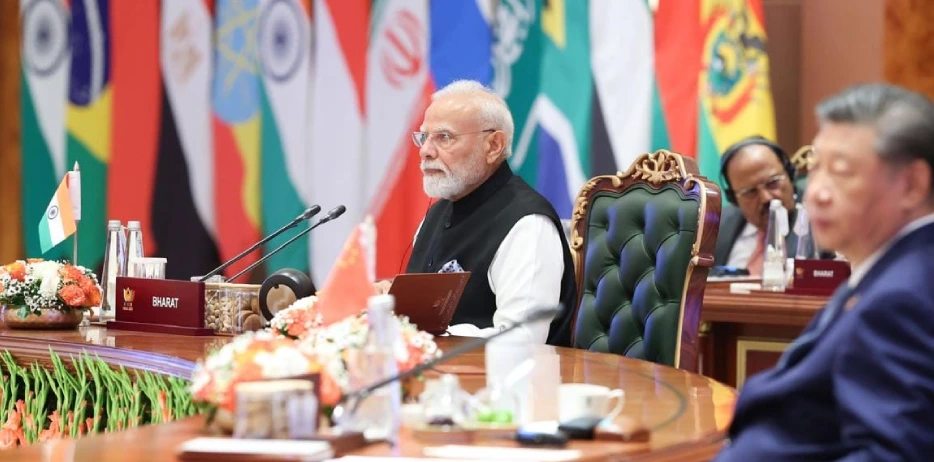
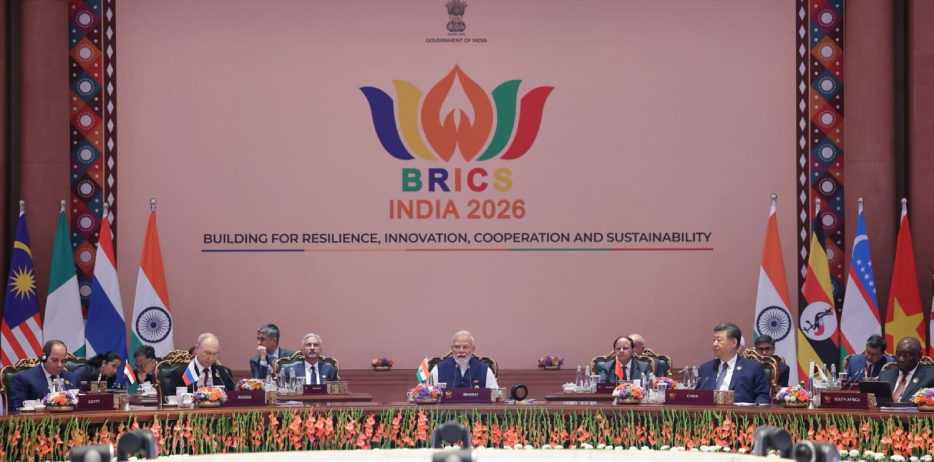
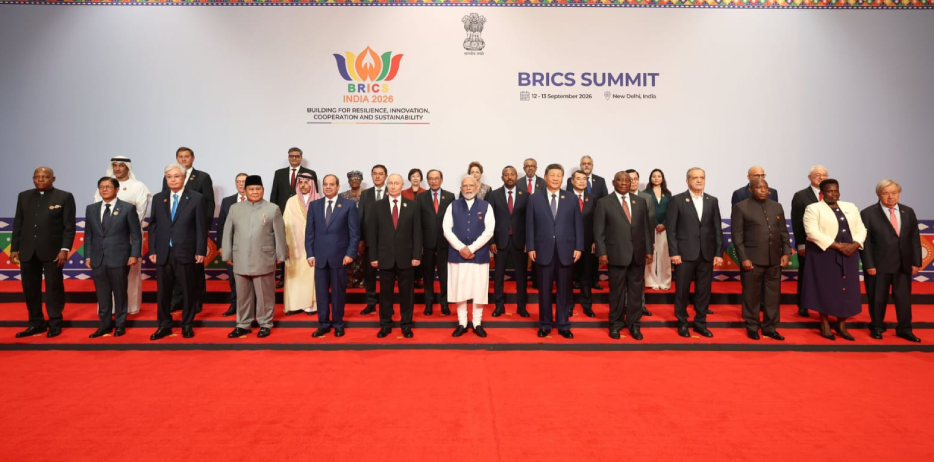
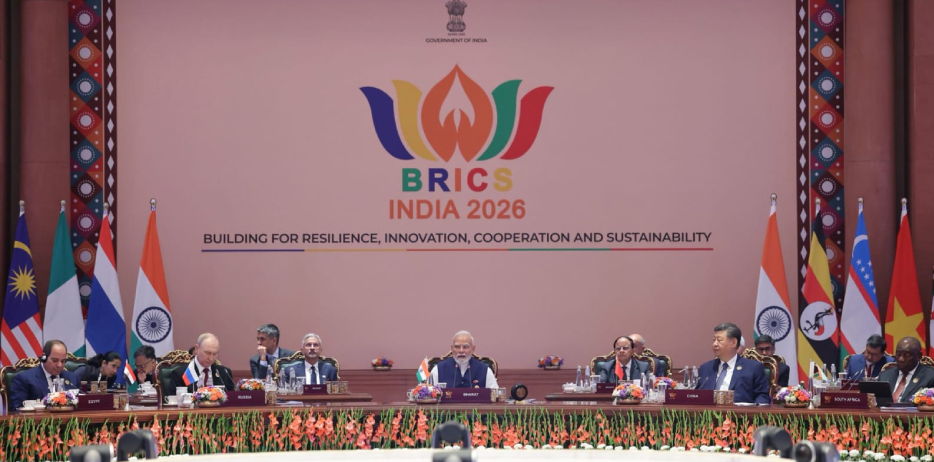
1. We, the Leaders of BRICS countries, met in New Delhi, India, from 12 to 13 September 2026 for the XVIII BRICS Summit held under the theme: “Building for Resilience, Innovation, Cooperation and Sustainability”.
2. We reaffirm our commitment to the BRICS spirit of mutual respect and understanding, sovereign equality, solidarity, democracy, openness, inclusiveness, collaboration and consensus. Building on two decades of BRICS, we further commit ourselves to strengthening cooperation in the expanded BRICS under the three pillars of political and security, economic and financial, cultural and people-to-people cooperation, and to enhancing our strategic partnership for the benefit of our people through the promotion of peace, a more representative, fairer international order, a reinvigorated and reformed multilateral system, sustainable development and inclusive growth.
3. We recognise the valuable contribution of Partner countries to BRICS cooperation. We underscore our strong belief that advancing the BRICS partnership with Emerging Markets and Developing Countries (EMDCs) will further contribute to strengthening the spirit of solidarity and international cooperation for the benefit of all. We reaffirm our commitment to fostering inclusive, mutually beneficial and development-oriented partnership with Partner countries. We encourage their increasing participation in BRICS engagements and practical cooperation in areas of shared interest.
4. We commend India for hosting the Outreach/BRICS Plus Dialogue segment of the 18th BRICS Summit, which injects new impetus to strengthen international cooperation and solidarity.
5. We commend the significant progress achieved under India’s BRICS Chairship in 2026, under the theme “Building for Resilience, Innovation, Cooperation and Sustainability”, which reflects our shared commitment to strengthening BRICS cooperation in addressing common challenges with a balanced, practical, actionable, inclusive, development-oriented and people-centered approach. We reaffirm our commitment to advancing cooperation on the thematic priorities, particularly through strengthening capacities, promoting innovation, and advancing sustainable development and resilience.
6. We welcome the convening of over four hundred meetings and engagements at the level of Ministers, Parliamentarians, Heads of Agencies, Officials, Experts, Businesses and People in thirty cities across India under the BRICS cooperation framework, which have contributed to strengthening the BRICS strategic partnership. We welcome the progress made in enhancing collective resilience, promoting innovation-driven economic growth, advancing sustainable development, deepening people-to-people exchanges, and amplifying the voice of BRICS for greater representation in global governance.
Inclusive Global Governance and Strengthening Multilateralism
7. On the landmark occasion of the 20th anniversary of BRICS, we reiterate our commitment to reforming and improving global governance by promoting a more just, equitable, agile, effective, efficient, responsive, representative, legitimate, democratic and accountable international and multilateral system in the spirit of extensive consultation, joint contribution and shared benefits. Bearing in mind the need to adapt the current architecture of international relations to better reflect the contemporary realities, we reiterate our commitment to strengthening multilateralism and multipolarity and to upholding international law, including the Purposes and Principles of the Charter of the United Nations (UN) in their entirety and interconnectedness in a balanced and inclusive manner, as its indispensable cornerstone, and the central role of the UN in the international system in which sovereign states cooperate to maintain peace and security, advance sustainable development, ensure the promotion and protection of democracy, human rights and fundamental freedoms for all, and promote cooperation based on the spirit of solidarity, mutual respect, justice and equality while respecting national circumstances, diversity of national systems and development pathways, with the aim to build a brighter shared future for the international community based on mutually beneficial cooperation.
8. We reiterate our commitment to ensuring greater and more meaningful participation and representation of EMDCs, as well as Least Developed Countries (LDCs), especially from Africa, Asia and Latin America and the Caribbean, in global decision-making processes and structures and making them better attuned to contemporary realities. We also call for achieving equitable geographical representation in the Secretariat of the UN and other international organizations in a timely manner, particularly by addressing the persistent underrepresentation of developing countries, including at senior and decision-making levels, as well as increasing the role and share of women, especially from EMDCs, at all levels of leadership and responsibilities in these organizations. We stress the need for the selection and appointment process of the UN executive heads and senior positions to be guided by the principles of transparency and inclusiveness, and carried out in accordance with all the provisions of Article 101 of the UN Charter, with due regard for recruiting staff on a geographical basis as wide as possible and the increased participation of women, and adhere to the general rule that there should be no monopoly on senior posts in the UN system by nationals of any State or group of States. We also deplore attempts, including by deliberately withholding assessed contributions, to unilaterally undermine the work of global multilateral institutions and impair the implementation of their respective mandates.
9. In light of the ongoing selection process of the next Secretary-General of the UN and bearing in mind the relevant provisions of the UN Charter, we note that no woman has ever been elected for the role of Secretary General, and only one national from Latin America and Caribbean, and only two nationals from Africa and Asia each have ever occupied this position.
10. We agree that, in the context of the contemporary realities of the multipolar world, it is crucial that developing countries strengthen their efforts to promote dialogue and consultations for more just and equitable global governance and mutually beneficial relations among nations. We acknowledge that multipolarity can expand opportunities for EMDCs to develop their constructive potential and enjoy universally beneficial, inclusive, sustainable and equitable economic globalization and cooperation. We highlight the importance of the Global South as a driver for positive change, especially in the face of significant international challenges, including deepening geopolitical tensions, rapid economic downturns and technological changes, protectionist measures, migratory challenges, and climate change. BRICS countries will continue playing a pivotal role in voicing the concerns and priorities of the Global South, as well as promoting a more just, sustainable, inclusive, representative and stable international order based on international law.
11. We welcome the adoption of United Nations General Assembly (UNGA) Resolution 80/250 on the declaration of the trafficking of enslaved Africans and racialised chattel enslavement of Africans as the gravest crime against humanity. We advocate the prompt. and full implementation of UNGA Resolution 79/115 of December 2024 in order to eradicate colonialism in all its forms and manifestations.
12. We reiterate the need to intensify the fight against racism, racial discrimination, xenophobia and related intolerance as well as discrimination based on religion, faith or belief, and all their contemporary forms around the world, including the alarming trends of rising hate speech, disinformation and misinformation.
13. Recognizing the 2023 Johannesburg-II Leaders’ Declaration, we reiterate our support for a comprehensive reform of the UN, including its Security Council, with a view to making it more democratic, representative, effective and efficient, and to increase the representation of developing countries in the Council’s memberships so that it can adequately respond to prevailing global challenges and support the legitimate aspirations of emerging and developing countries from Africa, Asia and Latin America, including BRICS countries, to play a greater role in international affairs, in particular in the UN, including its Security Council. We recognize the legitimate aspirations of African countries, as reflected in the Ezulwini Consensus and Sirte Declaration. We stress that the UN Security Council reform is to lead to the amplified voice of the Global South. Recalling the 2022 Beijing and 2023 Johannesburg-II Leaders’ Declarations, China and Russia, as permanent members of the UN Security Council, reiterate their support to the aspirations of Brazil and India to play a greater role in the UN, including its Security Council.
14. We reiterate our commitment to provide the United Nations with all the required support it needs to discharge its mandate and achieve concrete progress. We should continue the work to revitalize the General Assembly and strengthen the Economic and Social Council. We look forward to the full implementation of the 2025 Review of the Peacebuilding architecture.
15. We reaffirm the commitment to working tirelessly for the implementation of the 2030 Agenda for Sustainable Development and its far-reaching and people-centred Goals and targets in a balanced and integrated manner, in line with national policies and regulations, and recognize that eradicating poverty in all its forms and dimensions, including extreme poverty, is the greatest global challenge and an indispensable requirement for sustainable development. We further recognise the importance of promoting the 2030 Agenda in an innovative, coordinated, environmentally sound, open and shared manner. We take note of ongoing high-level discussions on global inequality and we recognize that inequality within and among countries is at the root of most challenges addressed by the 2030 Agenda, including by specifically addressing the drivers of inequality and prioritizing its reduction (SDG 10) in all its forms and dimensions. Expressing our resolve to act in a collective manner and take concrete steps to tackle inequality, we take note of the proposal of South Africa and Brazil to establish an international panel on inequality. We also look forward to close cooperation and substantive contribution of BRICS Countries to shaping the global agenda for the sustainable development beyond 2030.
16. We recall 1955 Asian-African Conference in Bandung, Indonesia that proclaimed general principles, including equality, independence, non-intervention, and mutual benefit. We stress that the Bandung Spirit serves as a reference in the pursuit of a fairer, more inclusive, and representative multilateral system.
17. With the growing share of EMDEs in global output and growth, reform of global economic governance remains a consistent BRICS priority. We will continue to strengthen coordination among BRICS members to make international financial institutions more representative, transparent and accountable. We reiterate the urgent need to reform the Bretton Woods Institutions (BWI) to make them more agile, effective, credible, inclusive, fit for purpose, unbiased, accountable, and representative, to enhance their legitimacy. BWI governance structure should be reformed to reflect the transformation of the global economy since their establishment. The voice and representation of EMDEs in the BWI must reflect their relative position in the global economy. We also reiterate our call for improved management procedures, including through a merit-based, inclusive and transparent selection process that would increase regional diversity and representation of EMDEs in the leadership of the IMF and the World Bank.
18. We reaffirm the BRICS Rio de Janeiro Vision for IMF Quota and Governance Reform and the need for a strong, quota-based and adequately resourced IMF at the centre of the global financial safety net to effectively support its members, particularly the most vulnerable countries. We urge entry into effect of the quota increases agreed under the 16th General Review of Quotas (GRQ) with no further delay and call for the development of approaches to meaningful quota realignment under the 17th GRQ at the earliest. We welcome the Diriyah Guiding Principles for Quota and Governance Reforms and reiterate that quota realignment should reflect countries’ relative positions in the global economy, increase the quota and voting shares of EMDEs and should not come at the expense of developing countries, while ensuring that a new, simple, and transparent quota formula protects the quota shares of the poorest members and guides but does not constrain access to Fund resources. We also believe that any voluntary financial contributions should not influence quota allocation, governance representation and voting power. In line with the BRICS Rio de Janeiro Vision for IMF Quota and Governance Reform, we stand ready to engage constructively with other IMF members to guarantee that meaningful quota share realignment and governance reforms are included in the 17th GRQ.
19. We reaffirm that the 2025 World Bank Shareholding Review is a critical tool to strengthen multilateralism and enhance the legitimacy of the World Bank Group, as a better, bigger, and more effective development finance institution. In line with the Lima Principles, we reaffirm that BRICS countries should continue to advocate for the increased voice and representation of developing countries, underpinned by a shareholding realignment that corrects their historic underrepresentation.
20. Recalling the 2026 Statement on Preserving and Revitalizing the Multilateral Trading System and 2025 BRICS Declaration on World Trade Organization Reform and Strengthening of the Multilateral Trading System, we reaffirm our unwavering support for reform of the World Trade Organization (WTO) and to strengthening a non-discriminatory, open, equitable, transparent, fair, inclusive, predictable and rules-based multilateral trading system, with the WTO at its core, while upholding the foundational principles, such as Most-Favoured-Nation Treatment and Special and Differential Treatment for developing members, particularly LDCs. We remain committed to active engagement in multilateral negotiations in Geneva, especially in the debates regarding the reform of the WTO. We will advance efforts and enhance coordination under the BRICS Informal Consultative Framework on the challenges undermining the effectiveness and credibility of the WTO and solutions to these challenges. We will ensure the implementation of the MC14 outcomes and continue to engage constructively towards the resolution of outstanding issues. We will engage constructively in the WTO reform to enhance the WTO’s authority, effectiveness, inclusiveness, and relevance, and build an open world economy. In this regard, we recognise that it is important to identify appropriate pathways for plurilateral initiatives into the WTO legal framework including on development-oriented issues, and to explore the formulation of forward-looking rules in the WTO. We strongly advocate for the immediate restoration of an accessible, effective, fully functioning, two-tier binding WTO dispute settlement mechanism as a foundation for trust and predictability for all WTO members, and the appointment of new Appellate Body members without further delay. We look forward to working towards strengthening the organization through the necessary reform while upholding the foundational principles of the WTO and facilitating the negotiation process within the WTO framework, and to restoring the credibility of the multilateral trading system. Echoing the aspirations of the Global South to fully integrate into the multilateral trading system, we strongly support Ethiopia and Iran’s bid for accession to the WTO. We acknowledge China for expanding its zero-tariff treatment to cover 53 African countries with which it has diplomatic ties.