1. Meeting with young employees of nuclear industry enterprises
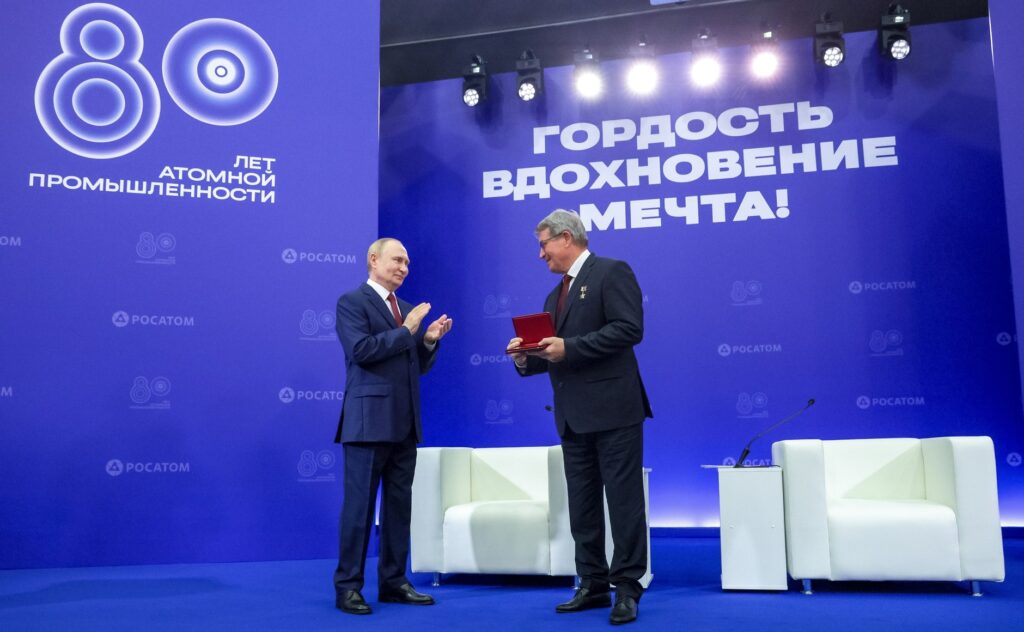
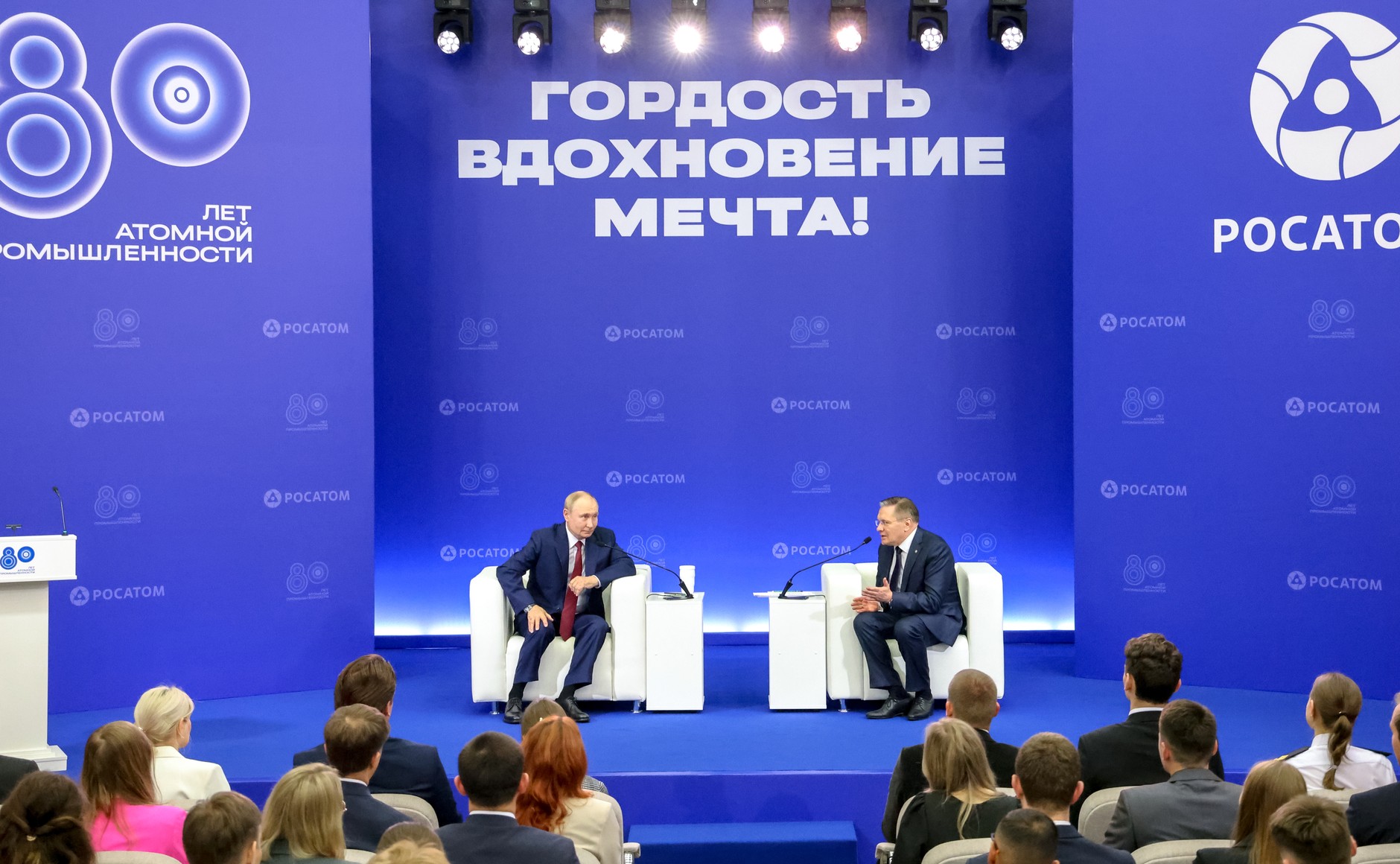
During his visit to the Russian Federal Nuclear Centre – National Research Institute of Experimental Physics, the President held a meeting with young employees of nuclear industry enterprises.
August 22, 2025 22:25
Sarov
Excerpts from a Q&A session by Russia’s President Vladimir Putin’s at the meeting with young employees of nuclear industry enterprises (Sarov, August 22, 2025)
Key talking points:
• Rosatom is at the forefront of creating and implementing cutting-edge technologies, as well as executing major infrastructure projects, including the Northern Sea Route².
<…> A great number of countries are interested in using it. Clearly, it would help reduce the transit times for cargo shipped from the Atlantic to the Pacific Ocean and the entire Asia-Pacific region – a region developing, as everybody knows, at an incredibly fast pace that the Western world has not imagined.
• For a nation like Russia, the paramount – even vital – challenge is the ability to preserve its sovereignty.
Now, it is true that there are countries which lack full sovereignty and are perfectly content with that arrangement.
In fact, most Western European nations fall into that category today. There are many other countries that may be content with this arrangement – but not Russia.
With the loss of sovereignty, Russia would simply cease to exist in its current form; that is absolutely certain.
• I would argue there are no unfriendly nations – only unfriendly elites governing them.
• [Previously] we have been focused on building [energy] ties with partners in friendly countries. <…> China, India, Bangladesh.
We even launched a new project with Türkiye despite the special military operation – and Türkiye being a NATO member.
So what have we actually lost? Finland, that is about it.
We are still working in Hungary, for instance, which is both a NATO and an EU member.
<…> We are, in fact, continuing the projects we used to run in [unfriendly] countries. We still supply nuclear fuel, and in substantial volumes.
We are providing [services] at almost the same level.
• [President Trump] and I had a very good, constructive and frank discussion in Alaska.
Our ministries, agencies, and companies remain in contact. I really hope that the first steps made are just the beginning of a full-scale recovery of Russia-US relations.
<…> The next steps depend on the US leadership.
I am certain that President Trump’s leadership skills are a good prerequisite for restoration of our relations. I hope that the pace of our joint work on this platform will be maintained.
2. The Northern Sea Route (NSR) is a major shipping lane along the Russian Arctic coast, stretching from the Kara Sea (near Novaya Zemlya) in the west to the Bering Strait in the east.
Key points:
It runs mostly within Russia’s Exclusive Economic Zone (EEZ) and is regulated by Russian authorities.
It is part of the broader Northeast Passage, which connects Europe to Asia through the Arctic Ocean.
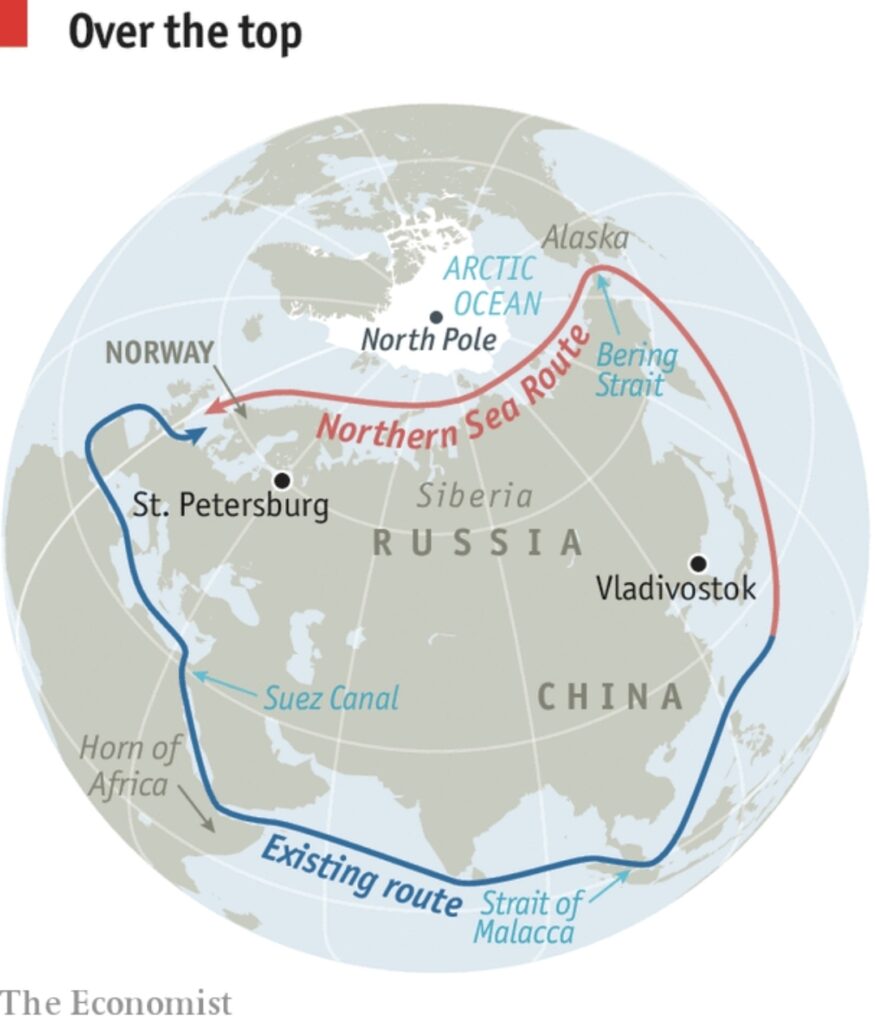
It shortens the distance between European ports (e.g., Rotterdam) and East Asian ports (e.g., Shanghai) compared to the traditional Suez Canal route by up to 40%.
However, it is only navigable for part of the year because of sea ice, though climate change and icebreaker support have been extending the usable season.
Russia sees it as a strategic and economic corridor for energy exports (oil, gas, LNG) and trade.
Geopolitical importance:
Russia invests heavily in icebreakers and Arctic infrastructure to dominate the NSR.
China is interested in it as part of its “Polar Silk Road”, aiming to reduce reliance on southern routes like the Suez Canal.
The U.S., EU, and other countries monitor it closely because it may reshape global trade
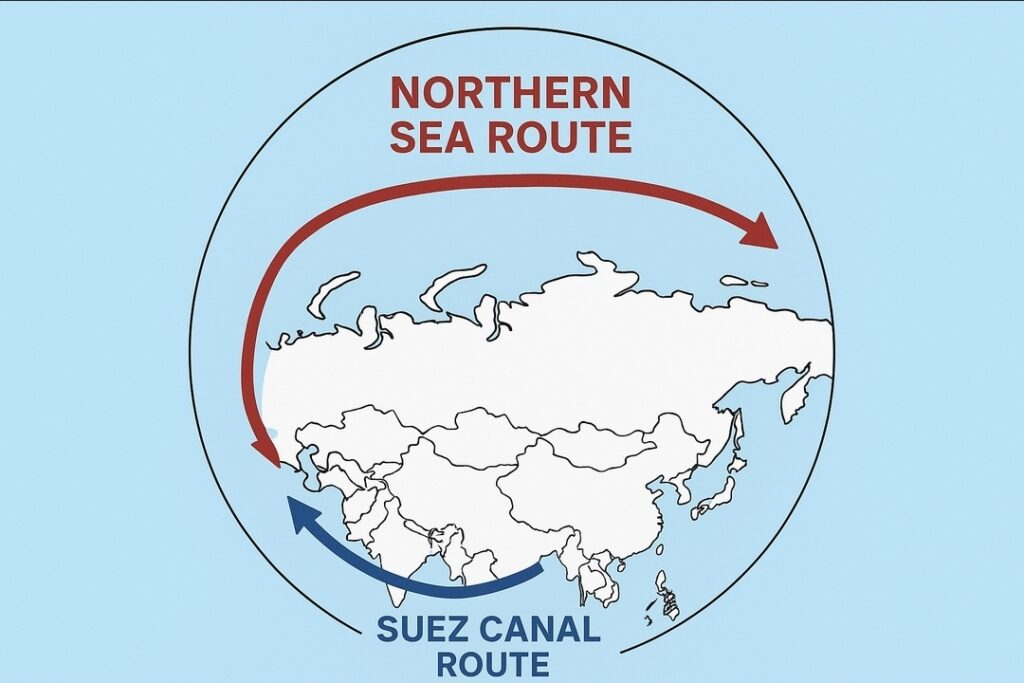
The red line (Northern Sea Route) traces the Russian Arctic coast, starting around the Kara Sea and heading east through the Laptev, East Siberian, and Chukchi Seas up to the Bering Strait. It runs entirely within Arctic waters and largely within Russia’s Exclusive Economic Zone .
The blue line (Suez Canal route) spans from Europe through the Mediterranean, the Suez Canal, the Red Sea, and the Indian Ocean toward East Asia.
Key Geography Clarified
Northern Sea Route (NSR):
Begins in the Arctic waters between the Barents and Kara Seas (the Kara Strait).
Traverses the Kara, Laptev, East Siberian, and Chukchi Seas.
Ends at the Bering Strait between Russia and Alaska .
It does not reach the Atlantic directly, unlike the broader Northeast Passage.
The route spans around 5,600 km (3,100 miles) .
Suez Canal Route:
Runs from Europe via the Mediterranean Sea, through the Suez Canal, down the Red Sea, and into the Indian Ocean toward East Asia .
Read in full
http://en.kremlin.ru/events/president/news/77837