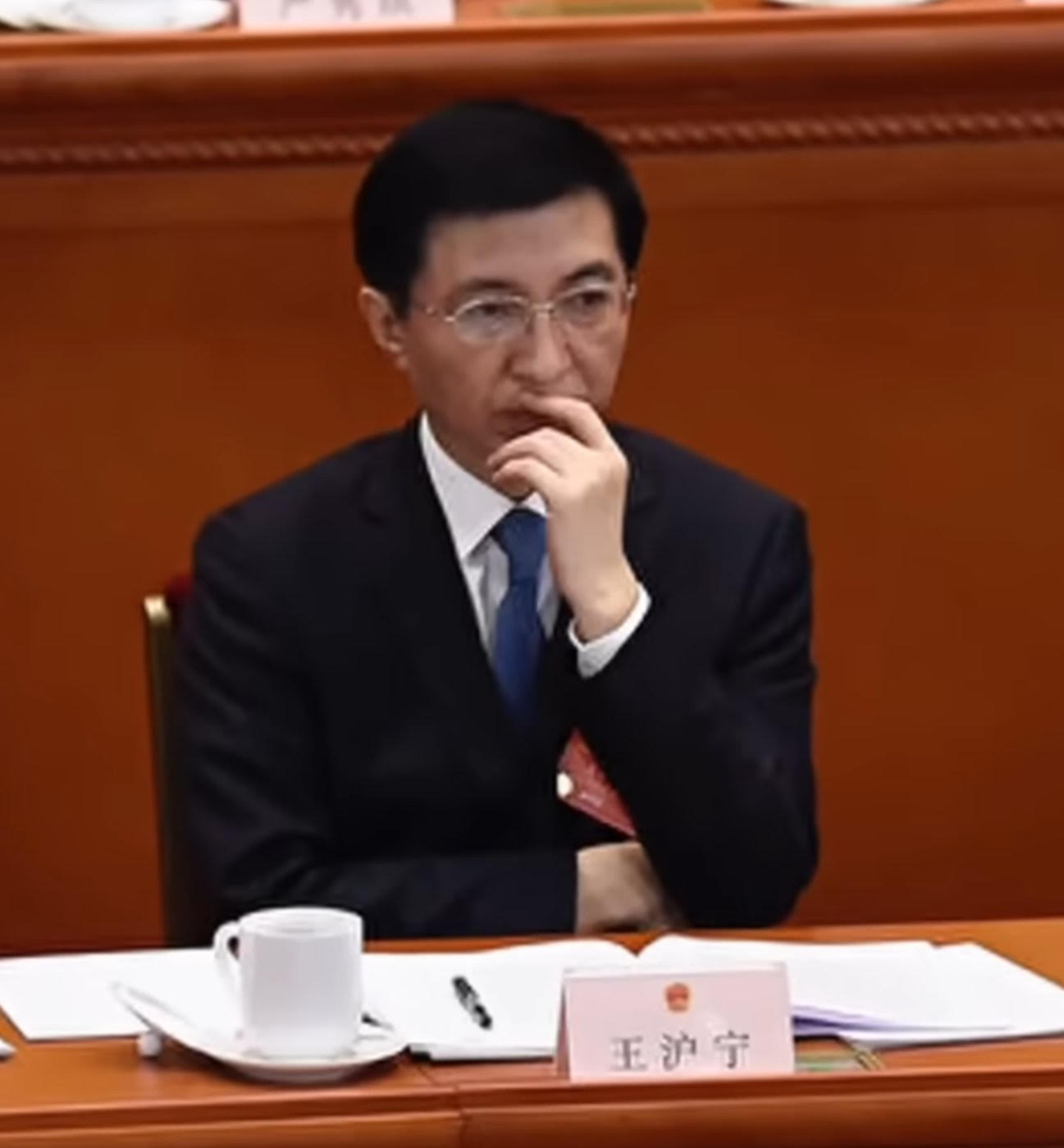
In 1988, a young scholar from China visited the US, 30 years later, he would become the 4th most highly ranked politician in China.
Prof. Wang Huning², visited over 30 US cities, over 20 institutions, think tanks and universities.
He visited the US at its zenith, instead of the glistening skylines of New York or the glamor of LA, he saw deep, unresolvable conflicts within the American society.
Wang Huning’s findings turned into the book “America Against America⁴”. He identified the following:
Lofty ideals of “liberty, equality and democracy” are in constant conflict with the historic realities of inequality, racial discrimination and special interest groups.
This gap between a “shining city upon a hill” and its actual social problems creates cognitive dissonance, social friction and periodic crises of legitimacy.
The conflict between individualism vs community manifests in weak social safety nets, challenges in fostering public consensus and the difficulties of mobilizing society for common goals beyond immediate self-interest.
Purism and diversity vs national identity and unity.
America’s strength as a melting pot of immigrants and subcultures is also its core weakness, how to maintain a unified national identity and political community.
The conflict between political equality and economic inequality.
One person one vote exist along side vast wealth inequalities, often inherited for generations. Economic power in the capitalistic system translates into political power. Through lobbying, campaign finance, media ownership, which distort the democratic process and calls into question the genuine equality of political voices.
The mechanics of democracy, stability vs inertia and gridlock. The US system of checks and balances federalism and a One Party Two Factions system is designed for stability and overt expressions of tyranny. However, it also creates gridlock and bureaucratic inertia and the inability to address long term, systemic challenges.
The system often prioritizes process and opposition over results and governance.
A classic problem of procedural democracy rather than actual democracy.
Power of religion in a secular state.
The formal separation of church and state coexist with a deeply religious society where faith is extremely influential in social and political life. Often overstepping by altering policies through puritanical interpretations of religious dogma.
Wang identified issues such as education, abortion and family values, as the core conflicts between religion and the secular state back in 1988.
Conformity vs the promise of freedom.
American society through consumerism and mass media creates deep conformity through trends and norms, despite the promises of individual choice and freedom.
The “freedom” to choose is channeled into commercial and standardized pathways, leading to a paradox where abundance and choice is limited.
Most exemplified in the One Party Two Factions system of Democrat vs Republican.
Change against tradition. America as a society venerates progress, innovation and the new, yet it is also deeply conservative, clinging on to historic constitutions, traditional values and established institutions. This tension drives both America’s dynamic adaptability and its often bitter cultural and generational clashes.
It’s deeply impressive that a young scholar in the 1980s from a less developed China, was not blinded by the flashy lights of Manhattan, seeing right through the fundamental fissures within the American society, and accurately predicts so many unresolvable conflicts decades beforehand.
Does the US have anyone who is this well informed on China? No they do not.
1.https://x.com/i/status/2002214695177236616
_____________________________
2. His further rise started by his views being taken by jiang zemin, the then party secretary of Shanghai and later further to Beijing when jiang become general secretary of CCP and president of China.
Wang become the one of the main brain of the great china development
___________________________
Wang Huning (王沪宁) is a prominent Chinese political theorist, senior Chinese Communist Party (CCP) leader, and one of the country’s most influential ideologues — the key figure behind many of the major ideological frameworks used in Chinese politics today.
Born in 1955 in Shanghai, Wang was a professor of international politics and later dean of the law school at Fudan University. He also spent time as a visiting scholar at U.S. universities.
Political career: Wang entered CCP politics in 1995, joining the Central Policy Research Office, a top party think tank. He led this office for nearly two decades (2002–2020)
Wang is widely regarded — both inside and outside China — as the CCP’s chief ideologist. He has helped develop and articulate the guiding political theories of three successive Chinese leaders:
Jiang Zemin’s “Three Represents”,
Hu Jintao’s “Scientific Development Concept”,
Xi Jinping’s core doctrines, including Xi Jinping Thought on Socialism with Chinese Characteristics for a New Era, Chinese-style modernization, and the Chinese Dream
His writings and theoretical work have shaped how the Party presents its governance model, legitimizes its rule, and frames China’s role internationally.
Relationship With Xi Jinping
Wang Huning has a close professional relationship with Xi Jinping — arguably among the closest in China’s political elite:
Trusted adviser: He is seen as a central ideological counselor to Xi, helping to formulate and refine the political concepts that underpin Xi’s agenda.
Why His Role Matters
Unlike most top Chinese leaders, Wang’s career did not involve governing a province or state ministry; his stature comes from his intellectual and theoretical contributions, making him an unusual but pivotal member of China’s leadership.
In sum, Wang Huning is the foremost ideological architect of modern CCP thought, playing a crucial role in shaping the doctrines that support Xi Jinping’s rule and China’s political agenda. His relationship with Xi is grounded in trust and intellectual influence rather than factional base or administrative power — making him one of the most consequential figures in contemporary Chinese politics.
_________________________
4. America Against America is part travelogue, part political-sociological study and part critique of U.S. society from the perspective of a rising Chinese academic. Wang traveled widely across the United States — visiting about 20 cities and universities — and used those experiences to explore contradictions in American life: its technological and economic achievements, and its social tensions and cultural discontents.
Wang’s central idea is captured in the title: the United States contains internal contradictions — America against America — meaning that its strengths (modernity, innovation, dynamism) are closely tied to its weaknesses (inequality, fragmentation, cultural tensions). He deliberately avoids simple praise or condemnation and instead presents a complex picture of a society he finds both impressive and problematic
Key themes and insights
1. Dual nature of the American system
Wang argues that the same features that made America powerful also make it fragile:
technological and economic dynamism vs. deep inequality and commodification;
democratic rhetoric vs. social alienation;
individual freedom vs. weakened social bonds and family structures.
Rare comparative perspective: The work offers a non-Western interpretation of U.S. society, useful for scholars interested in comparative politics or global views on modernity and governance