How did the United States rise from a fragile collection of colonies to the dominant power in the international system, and what does that history reveal about today’s great-power competition with China and Russia?
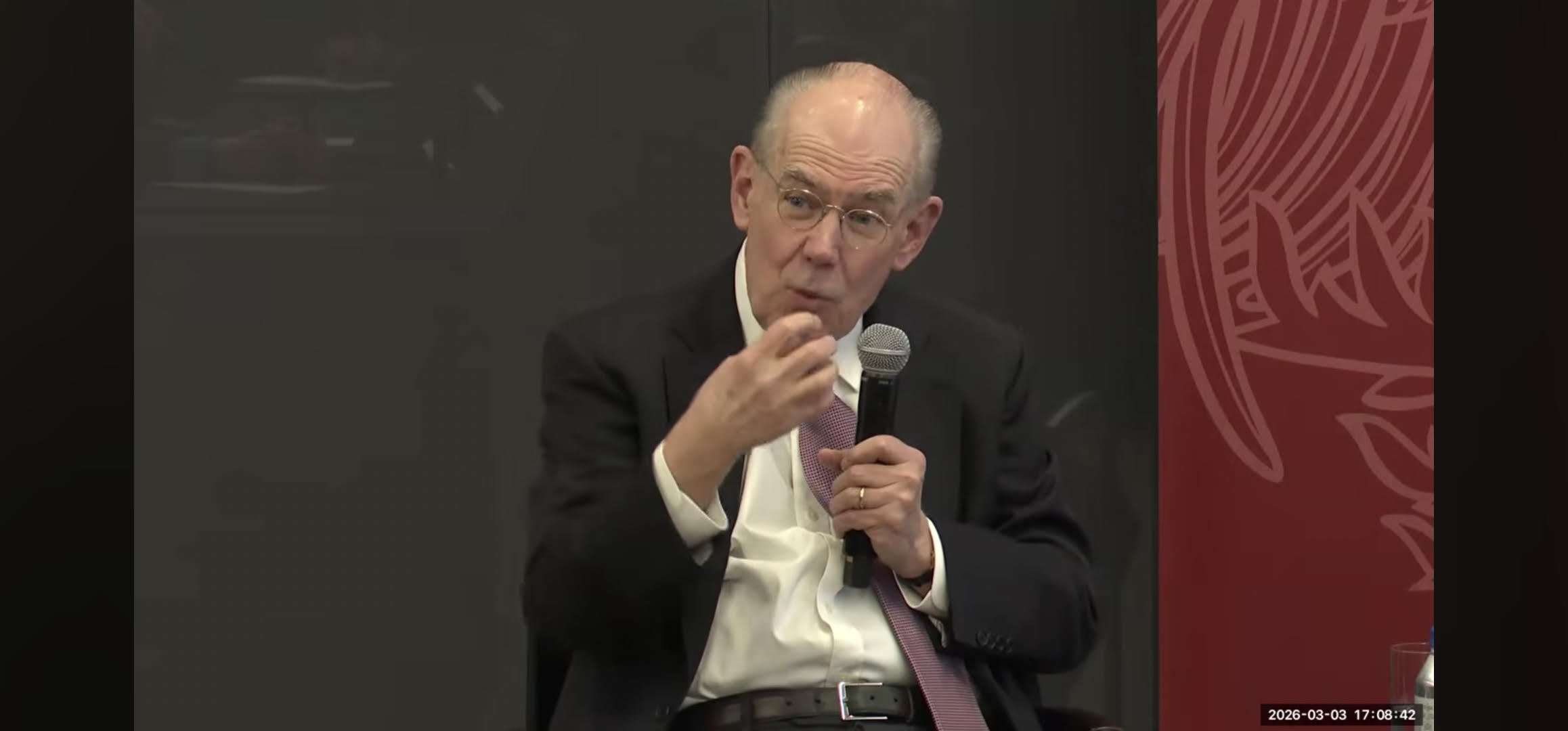
In this conversation hosted by the University of Chicago Graham School, Prof. John J. Mearsheimer – one of the world’s leading scholars of international relations theory and author of The Tragedy of Great Power Politics – examines 250 years of American foreign policy.
Beginning with the founding, he contrasts the United States’ liberal language of natural rights with the hard nationalism of a new state determined to secure its independence, expand across the continent, and keep rival powers out of the Western Hemisphere.
Mearsheimer explains his theory of regional hegemony, reflects on the Monroe Doctrine and the Cuban Missile Crisis, and considers how the Civil War, British grand strategy, and the defeat of the Confederacy shaped America’s rise. Along the way, he pushes back on claims of American exceptionalism, drawing on Reinhold Niebuhr’s critique of national self-righteousness.
Turning to the twentieth and twenty-first centuries, Mearsheimer traces U.S. foreign policy through the world wars, the Cold War, and the brief unipolar moment before the return of great-power rivalry with China and Russia.
He examines competing post–Cold War frameworks from Francis Fukuyama and Samuel Huntington, defends his own predictions about China’s rise – grounded in his theory of offensive realism – and explains why international relations theory is indispensable for statesmen and policymakers.
Moderated by Graham School instructor Jennifer Lind, this conversation with Prof. John J. Mearsheimer connects 250 years of American foreign policy to the defining questions of our moment: the rise of China, the war in Ukraine, tensions with Iran, and the future of U.S. power.
Key questions explored in this conversation:
· Is the Declaration of Independence really a liberal document or is it, as Mearsheimer argues, first and foremost a nationalist blueprint for American power?
· Why did the United States stay on the sidelines of both World Wars for so long and what does the strategy of buck-passing reveal about great powers?
· What does 250 years of great-power politics tell us about an emerging US-China Cold War?
· How does Mearsheimer interpret the war in Ukraine, NATO enlargement, and the shifting alignments reshaping the Middle East?
· How do Francis Fukuyama’s End of History and Samuel Huntington’s Clash of Civilizations hold up against Mearsheimer’s realist predictions – and who got it right?
Chapters
00:00 Introduction and opening remarks
01:26 “America at 250” with Jennifer Lind and John Mearsheimer
02:20 Liberal ideals and nationalism in the American founding
8:11 The Monroe Doctrine and regional hegemony
14:48 Civil War, British strategy, and American exceptionalism
20:54 World War I, World War II, and the strategy of buck-passing
29:24 Cold War security competition and ideology
31:56 Why international relations theory matters for strategy
40:00 The unipolar moment and the rise of China
44:44 End of History, Clash of Civilizations, and Tragedy of Great Power Politics
49:22 Q&A – Can allies share the burden of containing China?
52:58 Q&A – Iran, the Sunni-Shia split, and shifting alignments in the Middle East
57:17 Q&A – Mark Carney, middle powers, and U.S. economic and institutional leverage
01:02:09 Q&A – How much support should go to Ukraine, and who should provide it?
01:08:24 Q&A – NATO enlargement, the origins of the Ukraine crisis, and risks for Eastern Europe
01:18:51 Closing reflections and thanks
About the Speaker
¹John Mearsheimer is the R. Wendell Harrison Distinguished Service Professor of Political Science at the University of Chicago. He graduated from West Point and holds a PhD in political science from Cornell University.
Mearsheimer has written extensively on security issues and international politics. Among his seven books, The Tragedy of Great Power Politics won the Joseph Leopold Book Prize and has been translated into many languages. His other works include The Israel Lobby and U.S. Foreign Policy and The Great Delusion: Liberal Ideals and International Realities
About the Graham School
The Graham School is the University of Chicago’s home for lifelong learning, bringing UChicago’s faculty and intellectual tradition to adult learners through programs in the Great Books, the liberal arts, and advanced leadership.
Courses are designed to sharpen critical thinking, deepen cultural understanding, and foster lively discussion among learners from all walks of life.
One of the first university extension schools in the country, Graham has been part of the University since its founding in 1890.