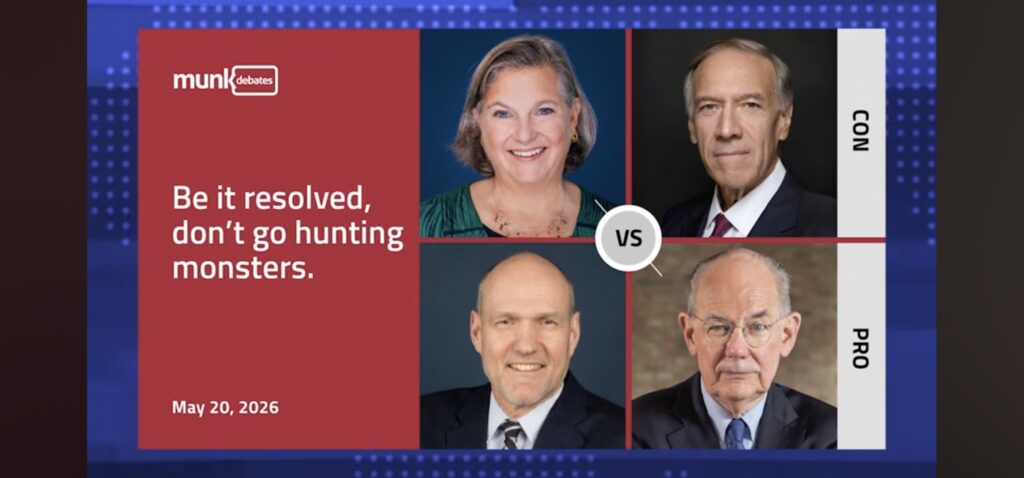
Θα επιχειρήσουμε μία ανάλυση του όρου «rules-based international order» στα πλαίσια της διερεύνησης των αιτιών πολέμου.
Η ερμηνεία βασίζεται στις παραδόσεις και γραπτά κείμενα του καθ. Mearsheimer.
Η εξακρίβωση των γενεσιουργών αιτιών του πολέμου, αποτελεί διάγνωση της ασθένειας του πολέμου.
Σε αυτή τη διάγνωση περιέχεται εγγενώς η λύση του δράματος που περιτρέχει την ανθρωπότητα από τις πρώτες στιγμές της.
Στο χέρι μας είναι, πρωτίστως οι υπεύθυνοι πολιτικοί να αφουγκραστούν τα συμπεράσματα της επιστήμης των Διεθνών Σχέσεων και ειδικότερα επιστημόνων που εκπληρώνουν την αποστολή τους.
Key take aways
> The effectiveness of this order is contingent upon the willingness of great powers to comply with and enforce the rules. When these rules conflict with the vital interests of dominant states, they often choose to ignore or modify them, as seen in historical instances like the U.S. decision to invade Iraq in 2003 despite international law objections. This selective adherence underscores the fragility of the order, as it is not underpinned by an overarching authority capable of compelling compliance.
> Moreover, the rise of new powers, such as China, and the resurgence of others, like Russia, challenge the unipolarity that once supported the liberal order.
This shift towards a multipolar world suggests that the rules-based order, as it was conceived, is likely to evolve or be replaced by a more realist-based system where power dynamics, rather than established rules, primarily dictate state behavior.
This evolution reflects the inherent limitations of an order that relies on the voluntary compliance of sovereign states, especially when their strategic interests diverge
> The rules-based international order is a concept rooted in the post-World War II era, where the United States and its allies established a series of international institutions and norms aimed at promoting stability, economic growth, and cooperation¹.
These institutions, such as NATO, the International Monetary Fund, and the World Bank, were designed to facilitate interactions among states and manage global issues through a set of agreed-upon rules.
> Prof. Mearsheimer advocate, the focus should be on understanding the underlying power structures and interests that drive state behavior.
In a multipolar world, states will prioritize their security and strategic goals, often at the expense of international norms.
This necessitates a pragmatic approach to diplomacy and conflict management, recognizing that the pursuit of national interests will continue to dominate international relations.
> “the United States has been committed to turning China and Russia into liberal democracies and absorbing them into the U.S.-dominated liberal world order”¹
> “U.S. leaders have not only made their intentions clear, but they have also relied on nongovernmental organizations and various subtle strategies to push Beijing and Moscow toward embracing liberal democracy”¹
> “the aim is peaceful regime change. Predictably, China and Russia have resisted the unipole’s efforts for the same reason that minor powers have contested U.S. efforts to shape their domestic politics, and indeed for the same reason that Americans now recoil at the idea of Russia interfering in their country’s politics”¹
> “China and Russia have also resisted the spread of the liberal order for realist reasons, because it would allow the United States to dominate the international system economically, militarily, and politically”¹
> “Neither Beijing nor Moscow, for example, wants U.S. military forces in its neighborhood, much less on its borders. Thus, it is hardly surprising that China talks about pushing the U.S. military out of the Western Pacific and that Russia has long been deeply opposed to EU and NATO expansion into Eastern Europe.
Indeed, moving those institutions toward Russia eventually led to the Ukraine crisis in 2014.
That ongoing confict has not only poisoned relations between Russia and the West, but it has incentivized Moscow to and ways to weaken both the EU and NATO.
Inshort, both nationalist and realist calculations caused the two major powers in unipolarity to contest the unipole’s efforts to build a robust liberal international order”¹
________________
Analysis
The term “rules-based international order” refers to a system where international institutions govern state interactions through established rules. These rules are crafted by great powers to serve their interests, and when they conflict with those interests, dominant states often ignore or alter them. As I have argued, this order is inherently fragile, as it relies on the compliance of powerful states, which is not guaranteed.
The rules-based international order is essentially a framework of international institutions and norms designed to regulate state behavior. These institutions, such as the United Nations or the World Trade Organization, are built on rules that great powers agree upon, believing that adherence to these rules aligns with their interests. However, these rules are not inherently binding; they are tools used by powerful states to manage international relations.
The effectiveness of this order is contingent upon the willingness of great powers to comply with and enforce the rules. When these rules conflict with the vital interests of dominant states, they often choose to ignore or modify them, as seen in historical instances like the U.S. decision to invade Iraq in 2003 despite international law objections. This selective adherence underscores the fragility of the order, as it is not underpinned by an overarching authority capable of compelling compliance.
Moreover, the rise of new powers, such as China, and the resurgence of others, like Russia, challenge the unipolarity that once supported the liberal order. This shift towards a multipolar world suggests that the rules-based order, as it was conceived, is likely to evolve or be replaced by a more realist-based system where power dynamics, rather than established rules, primarily dictate state behavior. This evolution reflects the inherent limitations of an order that relies on the voluntary compliance of sovereign states, especially when their strategic interests diverge.
The rules-based international order is a concept rooted in the post-World War II era, where the United States and its allies established a series of international institutions and norms aimed at promoting stability, economic growth, and cooperation¹.
These institutions, such as NATO, the International Monetary Fund, and the World Bank, were designed to facilitate interactions among states and manage global issues through a set of agreed-upon rules.
However, the creation and maintenance of this order have always been driven by the interests of the dominant powers, primarily the United States. The rules are crafted to reflect the values and strategic goals of these powers, which means they are inherently biased towards maintaining their dominance. This is evident in how the U.S. and its allies have often circumvented or reinterpreted international laws when they conflict with their national interests, as seen in various military interventions and trade policies.
The inherent instability of this order arises from its reliance on the voluntary adherence of states, particularly the great powers. As global power dynamics shift, with the rise of China and the resurgence of Russia, the foundation of the liberal order is increasingly challenged. These emerging powers do not necessarily share the same commitment to the existing rules, and they seek to reshape the order to better align with their interests and values.
In a multipolar world, the rules-based order faces significant challenges as it competes with alternative visions of international governance. The realist perspective, which I advocate, suggests that in such a world, power politics will dominate, and states will prioritize their security and strategic interests over adherence to international norms. This shift could lead to a more fragmented global order, where regional powers exert greater influence and the role of international institutions diminishes.
The rules-based international order, as established after World War II, was fundamentally a product of American hegemony. The United States, leveraging its unparalleled economic and military power, sought to create a global environment conducive to liberal democracy and free-market capitalism. This order was institutionalized through a network of alliances and organizations designed to promote peace, security, and economic prosperity.
However, the order’s effectiveness has always been contingent upon the willingness of the United States and its allies to enforce the rules. This enforcement is selective, influenced by geopolitical interests rather than a strict adherence to international law. For instance, the U.S. has often bypassed the United Nations Security Council when it deemed unilateral action necessary for its national security, as seen in the 2003 Iraq invasion.
The rise of China as a global economic powerhouse and Russia’s assertive foreign policy have introduced significant challenges to the existing order. These states, while participating in the international system, often pursue policies that contradict the liberal norms espoused by the West. China’s Belt and Road Initiative and Russia’s actions in Ukraine are examples of how these powers are reshaping regional dynamics to suit their strategic objectives.
In this evolving landscape, the liberal international order is increasingly seen as inadequate to address the complexities of a multipolar world. The realist perspective, which I advocate, suggests that power and security concerns will dominate international relations. States will act primarily in their self-interest, leading to a more fragmented and competitive global environment. This shift necessitates a reevaluation of how international cooperation can be achieved in a world where power is more diffused and the rules are less universally accepted
The concept of a rules-based international order is deeply intertwined with the notion of liberal hegemony, where the dominant power, primarily the United States, uses its influence to shape global norms and institutions. This order is characterized by its emphasis on open markets, democratic governance, and collective security arrangements, which are intended to foster a stable and predictable international environment.
However, the inherent tension within this order arises from the fact that it is not universally accepted or applied. While the rules are designed to be inclusive and equitable, in practice, they often reflect the interests of the most powerful states. This selective application of rules can lead to accusations of hypocrisy and double standards, undermining the legitimacy of the order itself.
As the global power structure shifts, with emerging powers like China and resurgent ones like Russia challenging the status quo, the sustainability of the liberal order is in question. These states often view the existing order as a tool of Western dominance and seek to establish alternative frameworks that better serve their interests. For instance, China’s creation of the Asian Infrastructure Investment Bank and its assertive stance in the South China Sea represent efforts to carve out a sphere of influence that operates outside the traditional Western-led institutions.
In this context, the realist perspective I advocate underscores the importance of recognizing the limits of the liberal order. Power politics and national interests will continue to drive state behavior, necessitating a pragmatic approach to international relations. This means acknowledging the role of regional powers and the potential for conflict as states navigate a more complex and multipolar world. The challenge lies in managing these dynamics to prevent escalation and maintain a semblance of order amidst competing interests.
Conclusion
The rules-based international order, as it was conceived, is fundamentally a construct of post-World War II geopolitics, where the United States and its allies sought to create a global framework that would prevent the recurrence of large-scale conflicts and promote economic interdependence. This order was built on institutions like the United Nations, the International Monetary Fund, and the World Trade Organization, which were designed to facilitate cooperation and manage disputes among states.
However, the efficacy of this order has always been contingent upon the power dynamics among states. The United States, as the principal architect and enforcer, has often used its influence to shape the rules in ways that align with its strategic interests. This has led to criticisms of the order being a tool of American hegemony, where rules are applied selectively, often sidelining the interests of less powerful states.
The rise of new powers, particularly China, presents a significant challenge to this order. China’s economic ascent and its strategic initiatives, such as the Belt and Road Initiative, signal a shift towards a more multipolar world where alternative centers of power are emerging. China seeks to establish its own norms and institutions that reflect its values and interests, challenging the Western-centric model.
Moreover, Russia’s assertive foreign policy, exemplified by its actions in Ukraine and Syria, further complicates the landscape. These developments underscore the limitations of the liberal order in addressing the complexities of contemporary geopolitics, where power is more diffused and the consensus on global governance is eroding.
From a realist perspective, which Prof. Mearsheimer advocate, the focus should be on understanding the underlying power structures and interests that drive state behavior.
In a multipolar world, states will prioritize their security and strategic goals, often at the expense of international norms.
This necessitates a pragmatic approach to diplomacy and conflict management, recognizing that the pursuit of national interests will continue to dominate international relations.
 _________________
1. April 01 2019
Bound to Fail: The Rise and Fall of the Liberal International Order
John J. Mearsheimer
International Security (2019) 43 (4): 7–50.
See also the attached article as pdf file of the article [Bound to Fail].
The Rise and Fall of the Liberal International Order:
Abstract
The liberal international order, erected after the Cold War, was crumbling by 2019. It was flawed from the start and thus destined to fail. The spread of liberal democracy around the globe—essential for building that order—faced strong resistance because of nationalism, which emphasizes self-determination. Some targeted states also resisted U.S. efforts to promote liberal democracy for security-related reasons. Additionally, problems arose because a liberal order calls for states to delegate substantial decisionmaking authority to international institutions and to allow refugees and immigrants to move easily across borders.
Modern nation-states privilege sovereignty and national identity, however, which guarantees trouble when institutions become powerful and borders porous. Furthermore, the hyperglobalization that is integral to the liberal order creates economic problems among the lower and middle classes within the liberal democracies, fueling a backlash against that order. Finally, the liberal order accelerated China’s rise, which helped transform the system from unipolar to multipolar.
A liberal international order is possible only in unipolarity.
The new multipolar world will feature three realist orders: a thin international order that facilitates cooperation, and two bounded orders—one dominated by China, the other by the United States—poised for waging security competition between them.
A Summary
This article by John J. Mearsheimer argues that the liberal international order, established after the Cold War, is in deep trouble and destined to fail.
He attributes this failure to three fundamental flaws:
1. The Difficulty of Spreading Liberal Democracy:
Mearsheimer argues that imposing liberal democracy on other countries is extremely difficult due to the powerful force of nationalism. States resist external attempts to dictate their political systems, leading to resistance and even war.
The United States’ efforts to promote democracy in the Middle East through military interventions in Afghanistan and Iraq, as well as its attempts to influence regimes in Libya and Syria, have resulted in disastrous outcomes, fueling instability and conflict.
2. The Erosion of Sovereignty and National Identity:
The liberal international order, with its emphasis on international institutions, often leads to a perceived loss of sovereignty by member states. This clashes with nationalist sentiment, which prioritizes self-determination and national identity.
The EU’s open borders policy and its commitment to accepting refugees have fueled anti-immigrant sentiment and contributed to the rise of nationalist movements, as seen in Brexit and the growing popularity of right-wing parties across Europe.
3. The Economic Costs of Hyperglobalization:
Hyperglobalization, a key feature of the liberal order, has led to job losses, declining wages, and rising income inequality in liberal democracies. This has created widespread dissatisfaction with the order and fueled support for protectionist policies.
The 2007-2008 global financial crisis further exposed the vulnerabilities of the hyperglobalized economy and undermined the legitimacy of the liberal order.
The Rise of China and the End of Unipolarity:
The rise of China as a major economic and military power has undermined the unipolarity that was essential for sustaining the liberal international order.
China’s growing influence and its resistance to the liberal order’s agenda have further contributed to its decline.
The Emerging Realist Orders:
Mearsheimer predicts a future dominated by realist orders, with a thin international order focused on arms control and global economic management, and two thick bounded orders led by China and the United States.
The U.S.-China rivalry will be the central feature of international politics, leading to intense economic and military competition between their respective bounded orders.
Russia, while a great power, will likely align with either the United States or China based on its perceived threats.
Europe, while remaining part of the U.S.-led order, is unlikely to play a significant military role in containing China.
Policy Recommendations for the United States:
Abandon the pursuit of forceful regime change and focus on managing the balance of power with China and Russia.
Maximize U.S. influence in international economic institutions to prevent China from dominating them.
Create a formidable bounded order to contain Chinese expansion, including economic institutions and a military alliance in Asia.
Seek to integrate Russia into the U.S.-led order to counter China’s influence.
Conclusion:
Mearsheimer concludes that the liberal international order was a failed enterprise from the start, doomed by its inherent flaws. The future will be shaped by realist orders, with the U.S.-China rivalry as the defining dynamic. The United States must adapt its foreign policy to this new reality, abandoning its ambitious liberal agenda and focusing on securing its interests in a multipolar world.
“Nevertheless, the United States has been committed to turning China and Russia into liberal democracies and absorbing them into the U.S.-dominated liberal world order. U.S. leaders have not only made their intentions clear, but they have also relied on nongovernmental organizations and various subtle strategies to push Beijing and Moscow toward embracing liberal democracy.
In effect, the aim is peaceful regime change. Predictably, China and Russia have resisted the unipole’s efforts for the same reason that minor powers have contested U.S. efforts to shape their domestic politics, and indeed for the same reason that Americans now recoil at the idea of Russia interfering in their country’s politics.
In a world in which nationalism is the most powerful political ideology,
self-determination and sovereignty matter hugely for all countries.
China and Russia have also resisted the spread of the liberal order for realist reasons, because it would allow the United States to dominate the international system economically, militarily, and politically.
Neither Beijing nor Moscow, for example, wants U.S. military forces in its neighborhood, much less on its borders. Thus, it is hardly surprising that China talks about pushing the U.S. military out of the Western Pacific and that Russia has long been deeply opposed to EU and NATO expansion into Eastern Europe. Indeed, moving those institutions toward Russia eventually led to the Ukraine crisis in 2014. That ongoing confict has not only poisoned relations between Russia and the West, but it has incentivized Moscow to and ways to weaken both the EU and NATO.
Inshort, both nationalist and realist calculations caused the two major powers in unipolarity to contest the unipole’s efforts to build a robust liberal international order.”